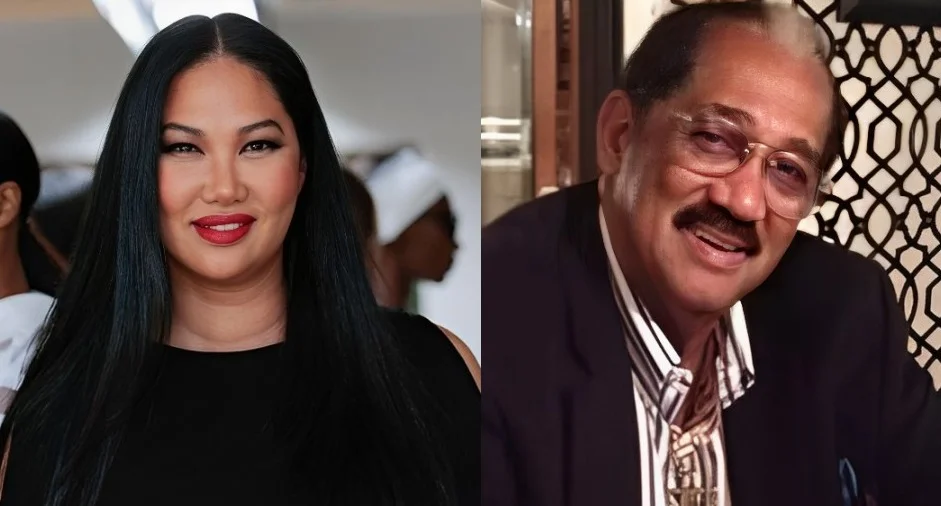
Quick Facts: Vernon Whitlock Jr.
- Full Name: Vernon Whitlock Jr.
- Birth Year: Approximately 1928
- Birthplace: St. Louis, Missouri (based on career history)
- Nationality: American
- Ethnicity: African-American
- Occupations: Deputy Federal Marshal, Barber, Bail Bondsman, Investigator
- Notable Achievement: First Black Deputy Federal Marshal in St. Louis
- Famous Child: Kimora Lee Simmons (supermodel, fashion mogul)
- Partner: Joanne Perkins
- Net Worth: Not publicly disclosed
Before Kimora Lee Simmons became a household name in fashion and entertainment, her father was already breaking barriers in St. Louis. Vernon Whitlock Jr. earned the distinction of becoming the first Black deputy federal marshal in the city — a historic accomplishment during a time when African-Americans faced enormous obstacles in law enforcement and government service.
Yet Vernon’s story extends well beyond that single milestone. He built a varied career that included work as a barber, bail bondsman, and private investigator. Each of these roles required a different skill set, and together they paint a picture of a man who refused to be defined by one profession or limited by the expectations of his era. While most people today know his name because of his famous daughter, Vernon Whitlock Jr. carved out his own legacy long before Kimora ever walked a runway.
Born around 1928 in or near St. Louis, Missouri, Vernon would have grown up during the Great Depression and come of age during a period of significant racial tension and social change in America. His story is one of resilience, adaptability, and quiet determination.
Early Life and Background
Growing Up in St. Louis
Vernon Whitlock Jr. was raised during one of the most challenging periods in American history. Growing up as a Black man in St. Louis during the 1930s and 1940s meant navigating a city with deeply entrenched racial segregation. St. Louis at the time had restrictive housing covenants, segregated schools, and limited professional opportunities for African-Americans.
Despite these barriers, Vernon pursued education and professional development. The specifics of his formal schooling haven’t been widely documented, but his later career accomplishments — particularly in federal law enforcement — suggest he was both well-educated and exceptionally driven. Entering government service as a Black man during the mid-20th century required not just qualifications but an extraordinary willingness to face institutional resistance.
A City Shaped by Segregation
St. Louis in the 1940s and 1950s was a city undergoing slow but significant transformation. The African-American community there was building institutions, churches, and businesses even as systemic racism constrained opportunity. It was within this environment that Vernon Whitlock Jr. began assembling the diverse career that would define his working life. His ability to succeed across multiple professions speaks to both his personal drive and the support of a community that valued self-reliance and achievement.
Vernon Whitlock Jr.’s Groundbreaking Career
First Black Deputy Federal Marshal in St. Louis
Vernon Whitlock Jr.’s most historically significant accomplishment was becoming the first Black deputy federal marshal in St. Louis. This wasn’t just a personal achievement — it was a milestone for the entire African-American community in the region. Federal marshals are responsible for protecting federal courts, transporting prisoners, serving warrants, and executing court orders. It’s a role that demands authority, composure, and the trust of the federal judiciary.
During the era when Vernon held this position, Black law enforcement officers were exceedingly rare, particularly at the federal level. His appointment would have required him to prove himself in ways his white counterparts simply didn’t face. He had to be not just competent but exceptional, knowing that any misstep would be scrutinized far more harshly because of his race.
The exact dates of his service as deputy federal marshal haven’t been widely reported, but given his approximate birth year of 1928, he likely held the position during the 1950s or 1960s — a period when the Civil Rights Movement was gaining momentum and the integration of government institutions was both contested and celebrated.
Career as a Barber
Vernon also worked as a barber, a profession with deep cultural significance in the African-American community. Black barbershops in mid-20th century America were far more than places to get a haircut. They served as community gathering spots, informal news centers, and spaces where Black men could speak freely. For Vernon, barbering was likely both a livelihood and a way to stay connected to his community.
The skills required — precision, people management, conversation, and a steady hand — overlap surprisingly well with the other roles Vernon held throughout his career. A good barber builds trust quickly, reads people well, and maintains a reputation through consistent work. These same qualities served him in law enforcement and investigation.
Bail Bondsman and Private Investigator
Vernon Whitlock Jr. also worked as a bail bondsman and investigator. As a bail bondsman, he would have been responsible for posting bail on behalf of defendants and ensuring they appeared in court. This role required knowledge of the legal system, an ability to assess risk, and strong connections within both the legal community and the neighborhoods where his clients lived.
His work as an investigator further demonstrated his analytical abilities and familiarity with law enforcement procedures. Whether conducting background checks, tracking down individuals, or gathering evidence, investigation work demands patience, attention to detail, and street knowledge — all qualities Vernon had cultivated across his other careers.
Together, these four professions — deputy federal marshal, barber, bail bondsman, and investigator — suggest a man who was resourceful, community-oriented, and comfortable operating in both institutional and informal settings.
Vernon Whitlock Jr. as Kimora Lee Simmons’ Father
Kimora’s Biracial Heritage
Vernon Whitlock Jr. is best known publicly as the father of Kimora Lee Simmons, the supermodel and fashion entrepreneur. Kimora was born on May 4, 1975, in St. Louis, Missouri. Her mother, Joanne Perkins, is of Japanese and Korean descent. This made Kimora biracial — African-American on her father’s side and East Asian on her mother’s side.
Vernon was approximately 47 years old when Kimora was born. The significant age gap between Vernon and many first-time fathers of that era wasn’t unusual, but it does mean that Vernon had already lived a full professional life by the time his daughter arrived. He’d broken racial barriers, built multiple careers, and established himself in St. Louis long before Kimora took her first steps.
Kimora’s Rise to Fame
Kimora Lee Simmons was discovered by a modeling scout at age 13 and signed with the prestigious Chanel fashion house by age 14, working directly with Karl Lagerfeld in Paris. She went on to become the creative director of Baby Phat, the women’s fashion line under Phat Fashions, which was founded by her then-husband Russell Simmons. Through Baby Phat, Kimora became one of the most recognizable figures in early 2000s fashion, blending hip-hop culture with high-end style.
She also starred in the reality television series “Kimora: Life in the Fab Lane,” which ran from 2007 to 2011 and gave audiences a glimpse into her life as a fashion mogul and mother. Her business ventures have since expanded into JustFab, a subscription fashion retailer, among other enterprises.
Vernon’s influence on Kimora’s character — her confidence, her willingness to break molds, and her entrepreneurial spirit — can reasonably be traced back to a father who himself refused to accept limitations on what a Black man could achieve in mid-century America.
Personal Life
Relationship with Joanne Perkins
Vernon Whitlock Jr. was in a relationship with Joanne Perkins, a woman of Japanese and Korean heritage. Their relationship was notable for its time — interracial couples in the 1970s still faced significant social stigma, even after the Supreme Court’s 1967 ruling in Loving v. Virginia that struck down laws banning interracial marriage.
Vernon and Joanne eventually separated when Kimora was young. Joanne raised Kimora primarily on her own, and Kimora has spoken in interviews about growing up with her mother and the challenges of being biracial in America. The extent of Vernon’s involvement in Kimora’s upbringing after the separation isn’t well-documented in public sources.
Current Status
Given his approximate birth year of 1928, Vernon Whitlock Jr. would be approximately 97 or 98 years old in 2026 if still living. There’s no confirmed public reporting on his current status. Out of respect for the family’s privacy, it’s important to note that very little personal information about Vernon has been shared publicly in recent years.
Vernon Whitlock Jr.’s Net Worth in 2026
Vernon Whitlock Jr.’s net worth has never been publicly disclosed. Unlike his daughter Kimora Lee Simmons — whose net worth has been estimated at around $200 million thanks to her fashion empire and business ventures — Vernon lived most of his professional life outside the public eye.
His careers as a deputy federal marshal, barber, bail bondsman, and investigator would have provided a steady income, but none of these roles typically generate the kind of wealth that attracts media coverage. Without any verified financial data available, it’s not possible to provide a reliable estimate of his net worth.
What’s clear is that Vernon’s value to his community and his family wasn’t measured in dollars. His contribution was in breaking barriers and building a path that, whether directly or indirectly, helped shape one of the most successful women in American fashion.
Frequently Asked Questions
Who is Vernon Whitlock Jr.?
Vernon Whitlock Jr. is an African-American man from St. Louis, Missouri, who made history as the first Black deputy federal marshal in the city. He also worked as a barber, bail bondsman, and private investigator. He’s widely known as the father of supermodel and fashion mogul Kimora Lee Simmons.
How old is Vernon Whitlock Jr.?
Vernon Whitlock Jr. was born around 1928, which would make him approximately 97 or 98 years old in 2026 if still living. His exact birth date hasn’t been publicly confirmed. He was reportedly about 47 years old when his daughter Kimora was born on May 4, 1975.
What did Vernon Whitlock Jr. do for a living?
Vernon held several professions throughout his career. He served as the first Black deputy federal marshal in St. Louis — a groundbreaking achievement during the era of segregation. He also worked as a barber, bail bondsman, and private investigator. Each of these roles connected him deeply to his community and the legal system.
Who is Kimora Lee Simmons’ father?
Kimora Lee Simmons’ father is Vernon Whitlock Jr., an African-American man from St. Louis. Her mother, Joanne Perkins, is of Japanese and Korean descent, making Kimora biracial. Vernon and Joanne separated when Kimora was young, and Kimora was primarily raised by her mother.
Is Vernon Whitlock Jr. still alive?
There’s no confirmed public information about Vernon Whitlock Jr.’s current status as of 2026. Based on his approximate birth year of 1928, he would be around 97 to 98 years old if still living. The family has kept details about his personal life private in recent years.
Related Celebrities
Vernon Whitlock Jr.’s most prominent connection to the celebrity world is through his daughter, Kimora Lee Simmons. Kimora’s career spans modeling, fashion design, television, and entrepreneurship. She was married to hip-hop mogul Russell Simmons from 1998 to 2009 and later to actor and investment banker Djimon Hounsou and Tim Leissner. Through these relationships and her own business acumen, Kimora has remained a fixture in entertainment and fashion circles for over three decades.
While Vernon himself was never a public figure in the entertainment sense, his groundbreaking work in law enforcement and his varied professional life in St. Louis represent a different kind of fame — the kind built on being the first to do something that others said couldn’t be done.